
Quantum Sensing|September 7, 2026
Cold Atoms and Gravity: Why NASA Is Developing a Quantum Sensor for Space
The QGGPf explores cold-atom sensing in orbit. Turning a sensitive laboratory signal into a deliverable instrument requires a complete engineering system.
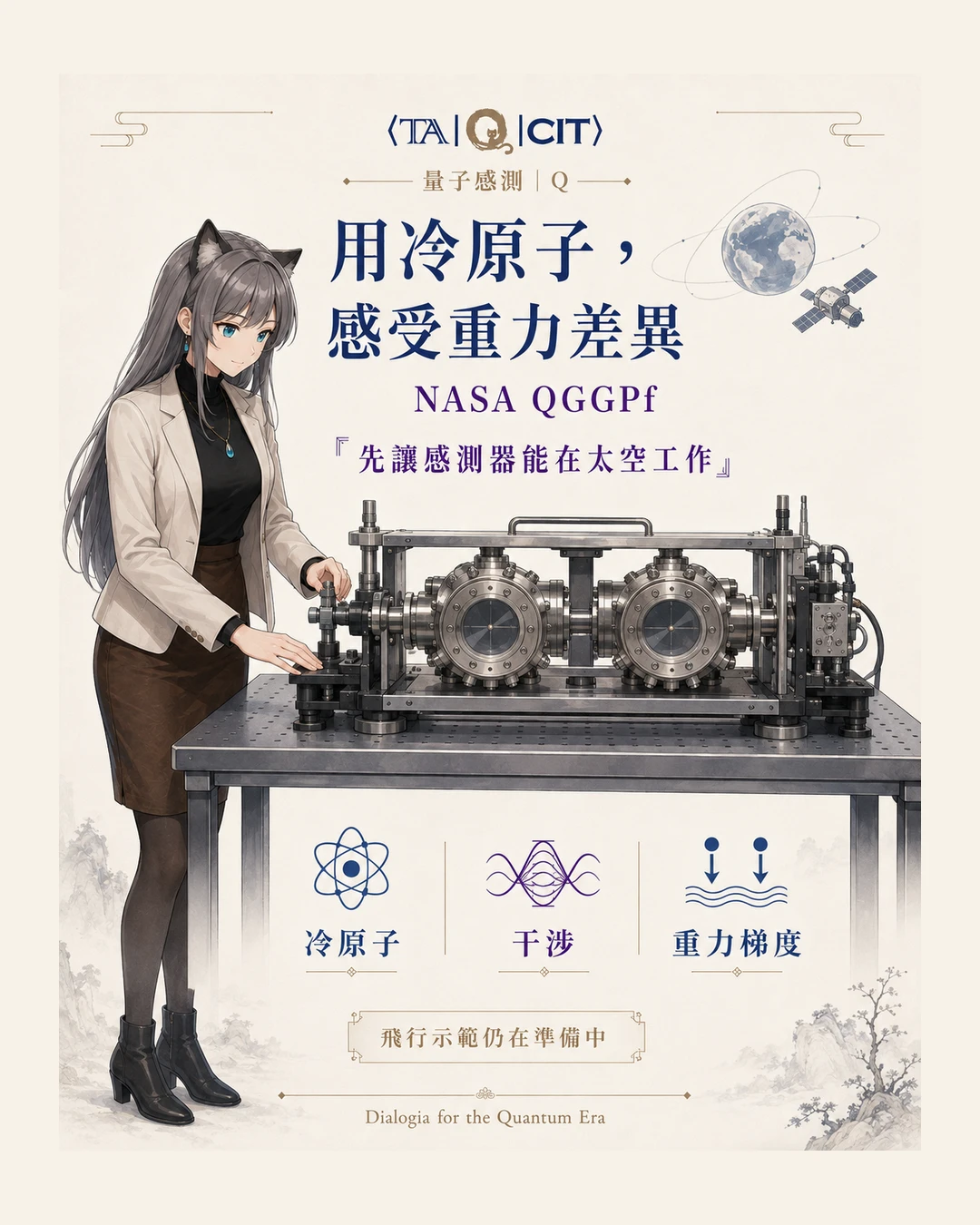
Measuring gravity, not photographing underground
Changes in water and ice redistribute Earth's mass and leave gravitational signals. NASA's Quantum Gravity Gradiometer Pathfinder (QGGPf) explores cold-atom interferometry for measuring spatial variations in gravity. This is quantum sensing, not a quantum computer. Turning the signals into Earth-science information also requires orbit, environmental, and data-analysis capabilities.
A pathfinder demonstrates technology
NASA ESTO identifies an on-orbit testing target no earlier than 2030, with JPL leading the project. The pathfinder is intended to demonstrate technologies and an observation method that could support a future science-grade instrument. This is not an instrument already delivering routine observations from orbit.
TAQCIT's engineering perspective
Lasers, vacuum systems, control, and integration must meet constraints in size, power, vibration, and reliability. Start with a customer's specifications and acceptance tests when evaluating supply-chain opportunities. This perspective does not announce a supplier contract.
Adapted from TAQCIT's September 7 social post, focusing on the sensing principle and engineering. The Chinese-language illustration is AI-assisted conceptual artwork, not a mission photograph.
Continue exploring technology and ideas for the quantum era